
TMD Treatment in Stouffville
TMD Treatment Near You
Jaw pain can make everyday activities like eating, talking, or opening your mouth uncomfortable. At Shin Dentistry, we provide TMD treatment in Stouffville for patients experiencing concerns involving their jaw joints and surrounding muscles. Because jaw discomfort can have different causes, we start by listening to what you have been experiencing and taking a closer look at your individual needs.
If you’re looking for TMD treatment near you, an assessment can help determine whether your symptoms may be related to TMD or another concern.

What Is TMD?
TMD stands for temporomandibular disorders, a group of conditions affecting the temporomandibular joints, chewing muscles, or surrounding tissues. The temporomandibular joints connect your lower jaw to your skull and allow your jaw to move when you speak, chew, swallow, and yawn.
TMD can cause pain or problems with jaw movement, but symptoms vary considerably between patients. Some people experience muscle soreness or stiffness, while others have pain around the jaw joint or difficulty opening their mouth comfortably.
If you’re searching for a dentist near you because of ongoing jaw discomfort, we can evaluate your symptoms, examine your jaw and surrounding structures, and discuss whether TMD may be contributing to your discomfort.
When Might You Need TMD Treatment?
An occasional jaw ache or clicking doesn’t necessarily mean you have TMD. However, consider arranging an assessment if you experience:
Persistent jaw or facial pain
Jaw stiffness, tightness, or limited movement
Jaw locking or difficulty opening and closing your mouth
Pain when chewing or yawning
Painful clicking, popping, or grinding
Frequent clenching or jaw tension
Headaches or neck discomfort along with jaw symptoms
TMD symptoms can overlap with other dental and medical concerns, so an assessment is important rather than assuming jaw pain has one specific cause.
What Can Contribute to TMD Symptoms?
TMD doesn’t always have one clear cause. In some cases, several factors may contribute to jaw pain or dysfunction. These may include:
Injury to the jaw or jaw joint
Arthritis affecting the joint
Teeth grinding or jaw clenching
Muscle tension
Certain repetitive jaw habits
Stress may also contribute to muscle tension or clenching in some people, although TMD should not automatically be attributed to stress alone.
If you are considering TMD treatment near you, we can assess your jaw symptoms and discuss which options may be appropriate for you. Understanding what may be contributing to your symptoms helps guide treatment recommendations.
What Are the Benefits of TMD Treatment?
When treatment is appropriate, it may help:
Reduce jaw pain or tenderness
Ease muscle tension
Improve comfort while chewing
Support more comfortable jaw movement
Help manage symptoms associated with clenching or grinding
Help manage symptoms that interfere with everyday activities
Because TMD includes several different conditions, there is no single treatment that is appropriate for everyone.
What to Expect During a TMD Assessment
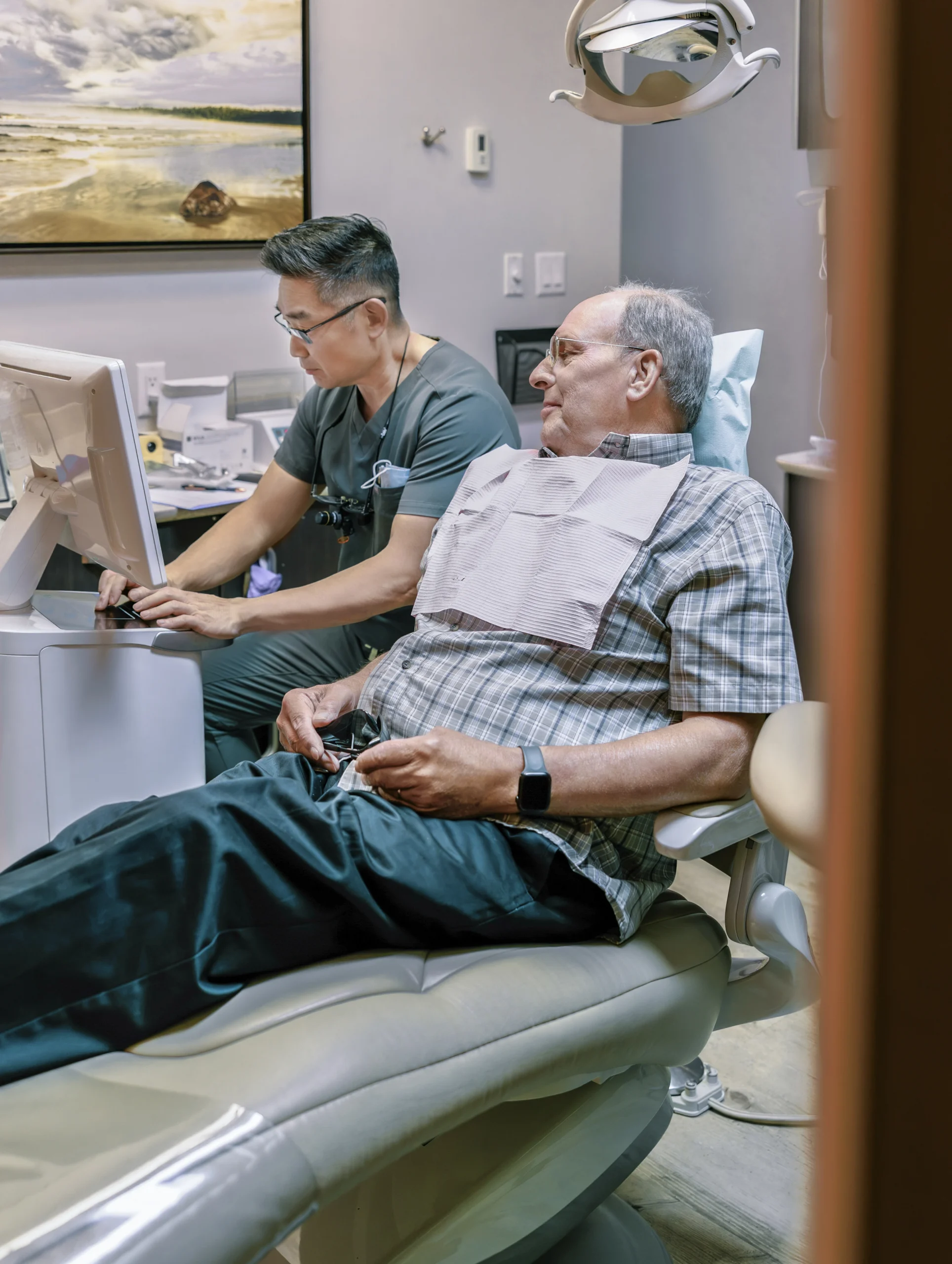
Reviewing your symptoms
We discuss your pain, jaw movement, clenching or grinding habits, and relevant dental and health history.
Examining your jaw
Our dentist may assess how your jaw opens and closes and check for tenderness, stiffness, or restricted movement.
Checking your teeth and bite
We evaluate signs of grinding, clenching, tooth wear, or other dental concerns.
Assessing the surrounding muscles
We check areas around the jaw, face, and temples for tenderness or tension.
Taking digital imaging
We may recommend X-rays when we need additional information about your teeth, jaw, or surrounding structures.
After the assessment, we explain our findings and discuss appropriate options.
How Is TMD Treated?
Treatment depends on your symptoms and what appears to be contributing to them. We often start with conservative approaches.
Depending on your needs, recommendations may include:
Temporarily choosing softer foods
Avoiding hard, chewy, or sticky foods
Gentle jaw stretching or massage
Applying heat or cold as recommended
Reducing habits such as jaw clenching
Medication for pain or inflammation when appropriate
A custom nightguard or bite appliance when appropriate
For patients with bruxism or excessive jaw muscle activity, we may also discuss therapeutic Botox® or another neuromodulator treatment. These injections reduce activity in selected muscles and may be considered in certain cases, but they are not appropriate for every type of TMD.
Why Choose Shin Dentistry for TMD Treatment?
Individual TMD assessments
We evaluate your symptoms, jaw movement, teeth, and surrounding muscles before recommending treatment.
Therapeutic Botox® options
Dr. Shin has advanced training in therapeutic neuromodulator treatment, which may be considered for appropriate muscle-related concerns such as bruxism and clenching.
Conservative treatment options
Depending on your needs, care may include home-care strategies, nightguards, and other approaches designed around your symptoms.
Advanced digital dentistry
Digital X-rays are available when imaging is appropriate as part of your assessment.
Serving Stouffville since 2003
Dr. Charles Shin opened the practice in Stouffville in 2003, and we continue to welcome patients from Stouffville and surrounding communities.
Convenient visits
Our location offers front-door parking and evening appointments until 8 p.m. on Mondays and Wednesdays.
Flexible access to care
We accept eligible CDCP patients and dental insurance, and we offer payment options.
Take the First Step Toward Greater Jaw Comfort
Persistent jaw pain, stiffness, or tension can interfere with eating, speaking, sleeping, and everyday comfort. An assessment can help determine what may be contributing to your symptoms and whether TMD treatment is appropriate.
Call Shin Dentistry at 905-640-2524 to arrange an appointment with a dentist in Stouffville. We are located at 12287 Tenth Line, Unit 5, Stouffville, ON L4A 0Y1.
FAQs
What does TMD stand for?
TMD stands for temporomandibular disorders, a group of conditions that can affect the jaw joints, chewing muscles, and surrounding tissues.
Does jaw clicking always mean TMD?
No. Clicking or popping without pain or difficulty moving your jaw is common and does not necessarily require treatment. If the sound is accompanied by pain, locking, or limited jaw movement, an assessment may be helpful.
Can TMD make chewing uncomfortable?
Yes. TMD can cause pain, stiffness, or muscle tenderness that makes chewing and other jaw movements uncomfortable.
Can therapeutic Botox® help with TMD?
Therapeutic Botox® may be considered for selected patients with muscle-related concerns such as bruxism or jaw clenching. It is not appropriate for every type of TMD, so your dentist will need to assess your symptoms before determining whether it may be an option.
How long does TMD treatment take?
There is no standard treatment timeline. It depends on the type and cause of your symptoms, their severity, and how you respond to the recommended approach. Your dentist can discuss what to expect after your assessment.